Teacher Workload Reduction: How Schools Can Support Teachers Better
Teacher workload reduction is one of the most important steps schools can take to improve teaching quality. Teachers are the heart of every school, but many of them spend too much time on administrative tasks instead of focusing fully on students.
In many schools, teachers handle lesson preparation, grading, attendance records, report writing, corrections, parent updates, and documentation. These tasks are important, but when they become too much, they reduce the time and energy teachers need for actual teaching.
This is why schools need systems that support teachers, not systems that make their work harder.
Why Teacher Workload Reduction Matters
Teacher workload reduction matters because overworked teachers cannot perform at their best for long.
When teachers spend hours compiling attendance, calculating results, preparing reports, and re-entering the same data, they become tired. As a result, lesson planning may suffer. Student support may reduce. Also, teachers may feel less motivated over time.
The OECD’s TALIS 2024 findings show that administrative workload remains a major demand on teachers, with about half of teachers across OECD education systems reporting excessive administrative work as a source of work-related stress.
This shows that teacher workload is not just a local school issue. It is a serious education management issue.
The Problem With Manual Academic Workflows
Manual academic workflows slow teachers down.
For example, a teacher may take attendance in a register, later submit the same record to the school office, then help compile it again for reports. In the same way, teachers may calculate results manually, transfer scores into sheets, and still make corrections when errors appear.
This creates repeated work.
The problem is not that teachers are inefficient. The real problem is that the system forces them to repeat tasks that can be automated.
How Technology Supports Teachers
Technology should not compete with teachers. It should support them.
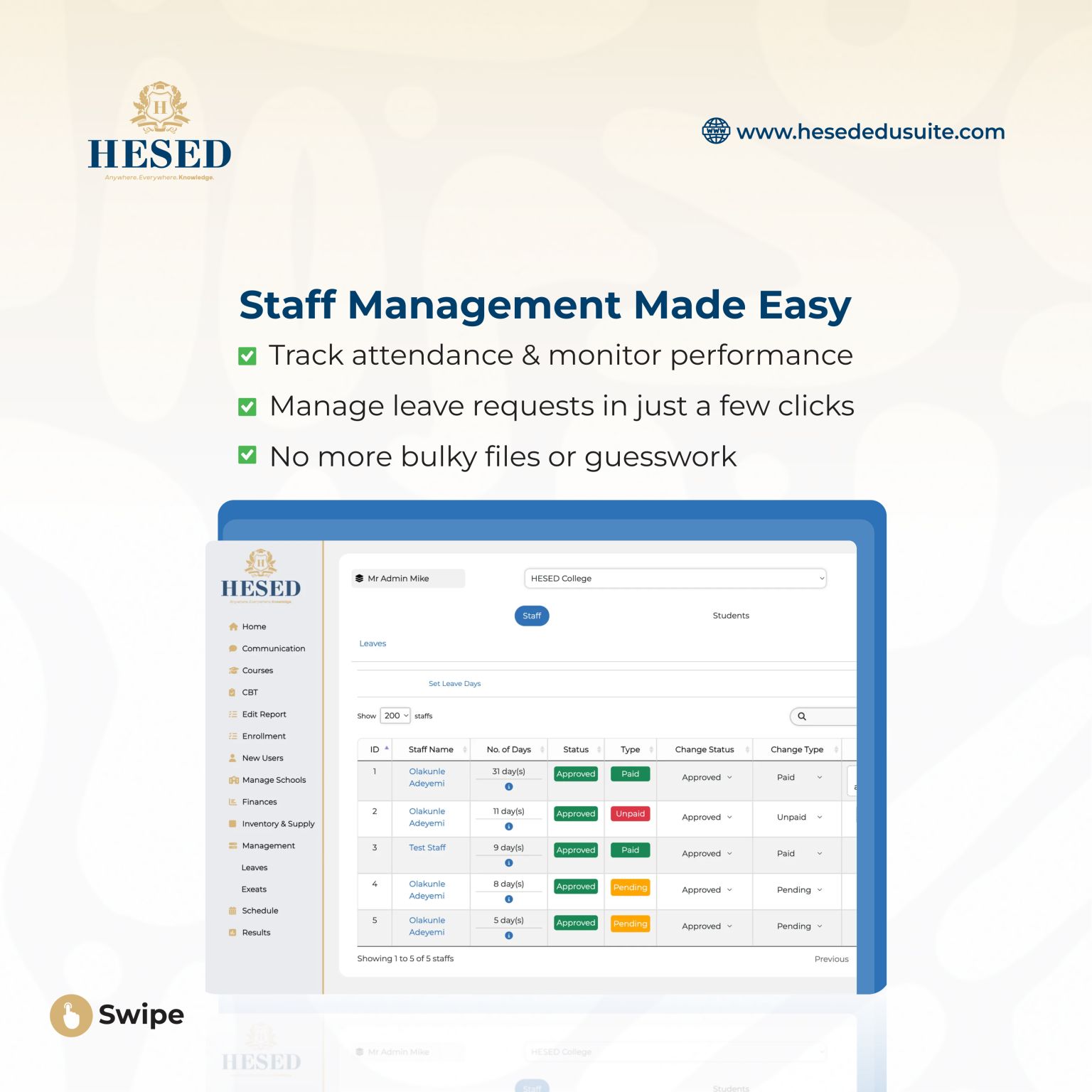
A digital school management system can help teachers handle attendance, grading, report preparation, student records, and communication more efficiently. Instead of repeating the same administrative work, teachers can update records once and allow the system to organise the information properly.
This gives teachers more time to prepare lessons, support struggling students, design better learning activities, and give meaningful feedback.
In addition, school leaders can access reports faster without putting unnecessary pressure on teachers.
When teachers receive better support, students benefit.
A teacher who is less overwhelmed can pay closer attention to learners. They can identify weak students earlier, prepare more engaging lessons, and provide better academic guidance.
Also, when administrative pressure reduces, teachers can spend more time improving classroom delivery. This helps the school create a better learning experience for students.
Therefore, teacher workload reduction is not only about making work easier for teachers. It is also about improving the quality of education.
How HESED EduSuite Helps Schools Support Teachers
HESED EduSuite is designed to reduce friction in academic workflows. It helps schools organise attendance, results, reports, records, and communication in a more structured way.
With the right system, teachers no longer have to carry every administrative task manually. They can focus more on teaching while the school maintains accurate records and better visibility.
This also connects with other school challenges. For example, schools that still depend on paper-based systems often make teachers repeat documentation. Also, schools with manual grading processes may experience result computation errors that create extra correction work.
By digitising key workflows, schools can reduce pressure and help teachers perform better.
Conclusion
Teachers should not spend most of their energy fighting paperwork.
They should spend more time teaching, guiding students, preparing quality lessons, and supporting learning progress. However, this can only happen when schools build better systems around them.
Teacher workload reduction helps schools improve staff wellbeing, reduce errors, save time, and strengthen classroom delivery.
The question is not only, “Are our teachers working hard?”
The better question is, “Are our systems helping teachers focus on what matters most?”